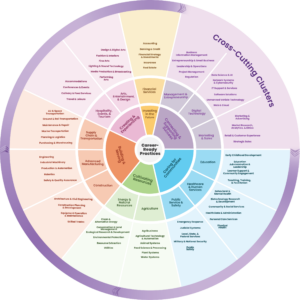
 Executing the vision for a large statewide initiative is no easy feat, but with guidance, clear objectives, and proper planning, aspirations can become reality. The modernization of the National Career Clusters® Framework presents an opportunity for states to transform CTE programs to be more learner-centered and industry-responsive. The Framework’s design, however, is only as impactful as its implementation.
Recognizing the support needed to maximize the Framework’s impact, Advance CTE selected eight states to join an “early adopters” cohort to pioneer its implementation. Throughout 2025, eight states worked to explore, adapt, and refine strategies to integrate the Framework effectively across diverse educational landscapes. With the help of an Advance CTE staff liaison and peer learning, these early adopters made strides in planning and achieving their goals for implementing the Framework.
This blog highlights the efforts and approach of four states—Iowa, New Mexico, Nebraska, and Tennessee—and the notable progress they have made in leveraging the Framework to help strengthen CTE in their state. Each of the early adopter states embarked on a journey to revise programs of study and better align them with industry needs using the Framework. Each state’s approach offers insights into practical strategies for implementing systems change(s) and reshaping programs of study for the better.
Aligning programs of study with modern industries and occupations allows learners to engage in more meaningful career exploration, exercise agency in choosing their career path, and gain the skills needed to succeed in the contemporary workforce. While the journey for each early adopter has been unique and shaped by state context, there are similarities in the processes they all engaged in to propel them toward successful implementation.
Evaluate and connect state systems
Iowa’s state team chose to conduct a SWOT (strengths, weaknesses, opportunities, and threats) analysis to kick off their planning and determine where to best focus their attention and time. To begin the initial phase of program of study revisions, they created a crosswalk that mapped programs of study from old Clusters to the new Framework using CIP codes. Iowa also took the opportunity to examine how Framework adoption could connect to other system-level changes, specifically middle-grade career development. HF 316 (2025) requires districts to implement career-focused learning starting in grade 5. Iowa leveraged Advance CTE resources, such as the industry sector profiles and one-pagers, to provide locals with tools, examples, and resources connected to Career Clusters.
Organize data and contextualize application
New Mexico also developed a crosswalk to refine and consolidate existing programs of study and create more flexible options for course and program offerings. The state team mapped course codes to programs of study and Career Clusters at the middle and high school levels. Throughout their revision process, New Mexico referenced state labor market information to determine program offerings and titles best suited to their state context. Their approach exemplifies how states can align programs to the Framework while still tailoring decisions to their unique needs. New Mexico’s efforts culminated in the successful adoption of the Framework and the release of a list of its approved programs of study.
Communicate and engage with the field
To facilitate the successful implementation of the Framework, Nebraska focused heavily on planning ahead and communicating with partners at the state and local levels. Nebraska’s state planning team engaged with career field specialists, district administrators, state leaders in the Department of Education, employer partners, and others, ensuring everyone understood the upcoming changes, especially those changes that could impact official policy. For their communication plan, Nebraska worked to determine who they wanted feedback from, what type of feedback was most helpful, and how they would incorporate feedback. Additionally, Nebraska leveraged existing platforms, such as conferences, to engage with the field, deliver a consistent message about updates to its state Framework, and gather input on the support needed for implementation.
Center the needs of learners and locals
Before being selected as an early adopter state, Tennessee was already in the process of modernizing its courses and Career Clusters, which helped shorten planning time and the work required to revise its programs of study once the cohort began. Tennessee launched a statewide “roadshow” and held office hours to meet with educators, counselors, local CTE directors, and the Tennessee Board of Regents to discuss how best to implement the new Framework. The feedback received helped the team make informed decisions rather than constantly fixing issues after changes were implemented. Educators and counselors expressed their appreciation for being included in the planning process, as it helped them understand their roles in implementation and prepared them for conversations with learners and families.
Tennessee’s central message emphasized the purpose behind the changes: to create a different high school experience, one that allowed learners to personalize it and align it with their goals. The state team’s thoughtful planning and effective outreach resulted in the release of updated Career Clusters, programs of study, and standards.
Lessons Learned
As they underwent change management and program of study revision, early adopters shared the following insights:
- Coordinate amongst state teams to create clear goals that are aligned with a larger vision of CTE program design and delivery in your state. Consider what you want learners to know and what their CTE experience looks like. Once goals are set, identify partners to consult, inform, and engage. Determine the roles, responsibilities, and necessary supports for those communicating change and those implementing change.
- Audit state systems to understand where they currently stand relative to set goals. Identify strengths to leverage existing structures or enabling conditions, and identify growth areas and obstacles that may impede progress. Consider how changes within systems are related to other CTE-connected goals.
- Balance goals to be ambitious and feasible. State teams must be aware of what is within their sphere of influence, what they can initiate, and what requires legislative or departmental approval.
The Work Continues
 Advance CTE continues to assist states in leveraging the Framework to meet the needs of learners and industry. Our Career Clusters Policy Tool is a resource for states to use to get started or advance implementation, guiding them through policy audits, communication strategies, and goal-setting.
Advance CTE is also hosting a workshop series centered on specific policy areas within the tool, which you can register for on our Career Cluster Support webpage. We thank and congratulate these states—and others in the early adopters cohort—for their work in advancing the National Career Clusters Framework and strengthening CTE programs of study! For states seeking additional implementation resources, view the Career Clusters webpage.