The start of a new school year or a new semester is an important time to engage the students we support to understand what they want to gain from their learning to achieve success in their education, life, and career. Career advising should be a connected, ongoing process across all learner-facing roles. Ideally, it should also use consistent frameworks to gain and share information about a learner’s career development.
What if there were a national framework for career exploration that could support learners of all ages?
Advance CTE is the steward of a national, practical tool for connecting education and workforce systems and partners, centering learners, and guiding career development.
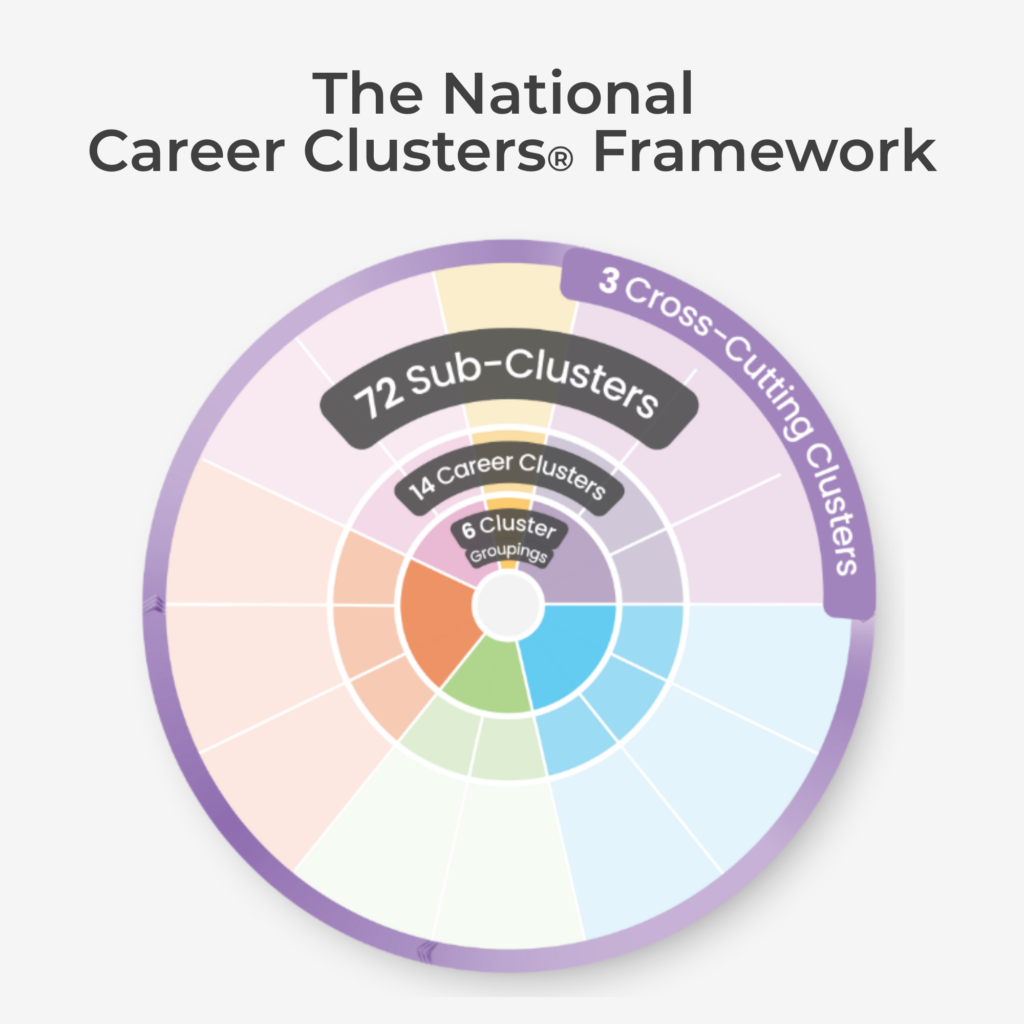
The National Career Clusters Framework is an organizing architecture used in some form by all states since 2003 to organize career exploration and preparation experiences, including career advising and Career Technical Education (CTE) programs of study.
We envision the Framework as the go-to career advising tool used nationwide by all professionals supporting learners in and beyond CTE. This blog breaks down our resource that provides ready-made messages and tools to get CTE leaders started, plus strategies to achieve statewide scale.
Getting Started: Communicating the Value of the Career Cluster Framework
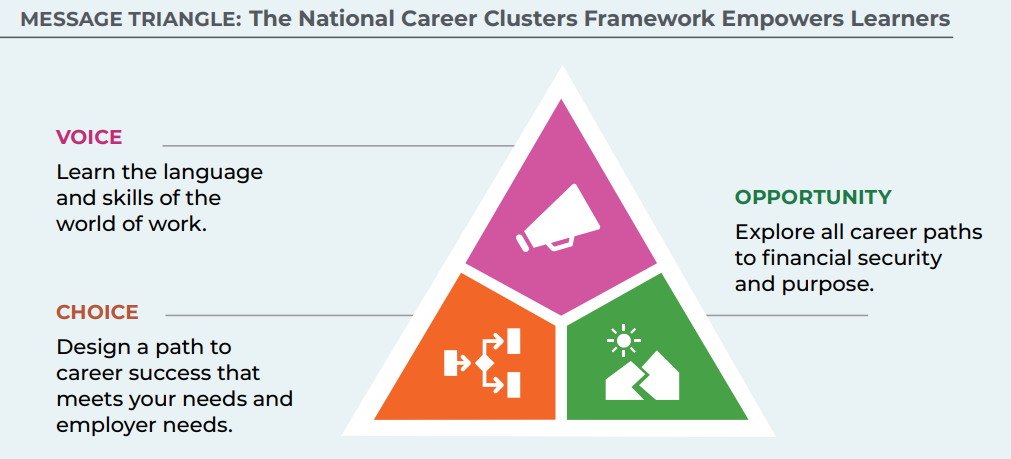
We know adopting a tool involves knowing the ‘why’ — how will using the Framework help leaders and learners?
Effectively Communicating the National Career Clusters Framework provides messages and talking points to help
- State and local leaders encourage use of the Framework by all educators and workforce development professionals
- Educators explain to learners how the Framework helps them
In order for all professionals to support career advising and for learners to actively use the Career Clusters Framework as a tool, the Framework should be embedded across learner-facing materials. The table below provides a list of learner-facing communication opportunities where the Framework can be used to help learners explore careers and subsequently document and connect that exploration.
Don’t feel you have to change all your communications right away — once you commit to the Framework, start with one communication, and receive feedback from both leaders and learners on its usefulness and whether it resonates.
Our six-step worksheet can help you get started to evaluate existing learner communications and identify places to incorporate the Career Clusters Framework.
The Next Step: Embedding Framework Use Into Career Advising Activities

High angle of teenagers sitting in a circle during discussion with counselor about future career plans
Raising awareness of the Framework through communication is the starting point. Going deeper requires an intentional sequence of activities that builds knowledge and actively applies Framework content to a learner’s career development journey.
Effectively Communicating the National Career Clusters Framework provides five principles for incorporating information about and the structure of the Career Clusters Framework into learner-facing communications. It also provides real-world examples of existing state Framework communication tools and strategies to incorporate the Framework across career advising.
The following is a list of strategies organized by the progression of career readiness that can be used by educators and career advisor professionals to support learners across all ages: Foundational, Early, Intermediate, and Advanced.
Foundational Career Advising
- Introduce vocabulary associated with work (industry, career field, skills, career, job, etc.) aligned to language in the Framework.
- Explain why careers are grouped into Career Clusters and what Clusters and Cluster Groupings are.
- Incorporate mention of the Framework in back-to-school presentations, course syllabi, and informational materials to introduce parents/guardians to the full world of work.
Help learners explore their future with Career Clusters® posters. Shop the collection today and bring career exploration to life in your classroom, school, or program.
Early Career Advising
- Document learner outcomes and reactions to career exploration activities such as career fairs, job shadowing, career interviews, online platform activities, etc., by Career Cluster to guide future conversations.
- Administer a career interest survey, then explore Career Clusters connected to the results. Advance CTE provides online and printable career interest surveys aligned to the Framework.
Intermediate Career Advising
- Use the Clusters and/or Sub-Clusters to assist learners in connecting interests. Connect one or more Career Clusters and/or Sub-Clusters to the sequencing and design of coursework, credentials, degrees, and connected opportunities.
- Use the Framework to give relevance to class selection and connections to the world of work, including available CTE and career pathway programs in your area.
Advanced Career Advising
- Provide learners with cross-disciplinary, real-world projects that make connections across coursework, the workplace, and the impact they want to have in their communities. Examples include:
- Project-based learning (Advance CTE has one-page samples to get you started!)
- Independent study
- Work-based learning
- Capstone projects or thesis
- For learners reskilling, upskilling, or switching degree programs, use Cluster Groupings and Cross-Cutting Clusters to connect lived and work experience to future career opportunities
State Structures for Sustainability
State CTE and career readiness leaders have existing infrastructure, staff, and communication channels to ensure all institutions, educators, and career advising professionals have the full knowledge and tools to communicate and use the Career Clusters Framework. States can take the lead in multiple ways, including:
- Compile and share tools connected to the Framework in statewide communications, including newsletters, videos, and emails.
- Embed information about the Career Clusters Framework and how to use it with learners in existing professional development to help education and workforce partners outside of CTE make connections to their work.
- Hold a multi-agency professional development event about the Career Clusters Framework in your state. Our resource provides messages to help share how this helps all professionals involved in career readiness.
- Update state-level learner-facing tools and websites for career advising to incorporate the Framework
Explore Effectively Communicating the National Career Clusters Framework for more messages, strategies, and tools.
Article FAQs
1. I am new to the Career Clusters Framework. Where can I learn about the basics?
We’re glad you’re interested! Our full Frequently Asked Questions provide an
overview of the history of the Framework, the structure, and how it is used.
2. Can the Career Clusters Framework support career advising and career exploration?
Yes! The Framework groups the world of work to reflect industry, while also providing an organized way for learners to explore specific industries based on their interests and motivations.
3. How old does a learner have to be to use the Framework?
The Framework is designed to support career development from elementary school through adulthood. Learners early in their career development will best understand the Cluster Groupings and Career Clusters, while more advanced learners can delve into Sub-Clusters and Cross-Cutting Clusters.
4. Are there existing career advising resources that use the Career Clusters Framework?
Yes! Advance CTE provides career interest surveys, industry sector profiles, and project one-pagers on our website for use by all educators and learners. O*NET also provides exploration of specific careers organized by Career Cluster.