Career Technical Education (CTE) is being asked to do something wildly complicated: identify emerging industries and prepare learners for a rapidly evolving workforce while remaining responsive to both regional employers and the needs of local communities. CTE needs to embrace cutting-edge technologies while implementing learner-centered, evidence-based teaching methods; it needs to be authentic and aligned with current workforce needs while also being adaptable and future ready.
CTE Connects provides a vision for navigating this complicated future. But how do we achieve this vision, transforming CTE to have a meaningful impact on the community? The answer: translational research. The Center on Education and Training for Employment (CETE), part of The Ohio State University, is a translational research center, focused on turning evidence from research into actionable practices and real-world solutions.
Translating CTE Principles into Practice
The principles outlined in CTE Connects emphasize the importance of systems that are connected to industry, informed by data, and designed around learner and workforce needs. CETE’s work puts these principles into action, engaging in job analysis, curriculum design, assessment and credentialing, evaluation, professional learning, family engagement, and educator preparation. CETE serves as a bridge between research and practice, helping state-level partners build CTE solutions that are relevant, sustainable, and grounded in research.
Start with the Duties and Tasks
Transforming CTE requires a clear understanding of the knowledge, skills, and competencies required for the work. And that understanding is strongest when the people closest to the work determine the competencies that matter most. CETE’s DACUM International Training Center captures the expertise of workers performing a job and translates that expertise into competency profiles that inform training, assessment, and workforce-development initiatives.
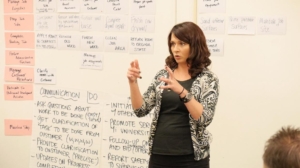
One example of this in action is CETE’s partnership with the National Rural Water Association (NRWA) to strengthen professional learning and workforce preparation for water and wastewater professionals serving small and rural communities. CETE put a multi-phase apprenticeship partnership into action, conducting DACUM analyses, verifying occupational tasks, aligning existing curriculum with workforce requirements, and developing curriculum frameworks that support competency-based training. These integrated activities create an evidence-based process that ensures job training reflects authentic workplace demands, preparing a skilled workforce for critical water industry roles.
The project demonstrates how industry expertise, structured job analyses, and curriculum design can work together to strengthen state-level workforce pipelines in sectors that are essential to community well-being and economic prosperity.
Connect Learning to Work
Learners excel when learning is connected to real career opportunities. CETE supports this connection through expertise in curriculum development, assessment design, workforce analysis, and professional learning. By grounding learning in workplace competencies, CETE develops training programs centered around the realities of what a day on the job actually looks like.
These connections extend to authentic, skills-based assessments. For example, CETE’s Technical Testing Project and WebXam™ platform support Ohio’s statewide CTE assessment system. Working in partnership with the Ohio Department of Education and Workforce, CETE develops end-of-course assessments across nearly 40 career pathways, helping ensure alignment between instruction, industry expectations, and student performance.
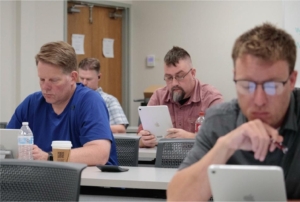
These assessments do more than just measure student learning. Whole-class and individual-student performance data—aligned to individual learning outcomes—inform instruction, identify opportunities for remediation, and ensure technical skill attainment for CTE students who will soon be putting these skills to work in their chosen careers fields. Testing data are also shared directly with districts and state agencies, reducing paperwork, driving district- and state-level program decisions, and facilitating the awarding of college credit at state colleges and universities.
Build Systems That Learn
Beyond implementing new programs, transformation requires creating systems that continuously learn and improve. CETE’s Excellence in Engagement and Evaluation program helps state leaders understand what is working, where challenges exist, and how programs can adapt, strengthening decision-making and increasing the likelihood that state-level investments will lead to meaningful outcomes.
From Principles to a Continuous Cycle of Improvement
True transformation is driven by a continuous cycle of research, practice, evidence, and improvement: Research informs practice, which generates evidence. Evidence informs decisions that shape programs and policies. And what is learned through implementation informs future research.
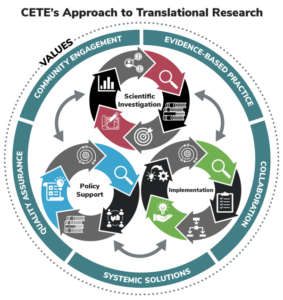
The National Rural Water Association partnership perfectly illustrates this cycle: Industry experts identify workforce needs through DACUM analysis. Those findings guide curriculum development. Job training is strengthened through evidence-based design, which means employers are able to gain access to a workforce that is better prepared for the realities of the job. And lessons learned along the way inform future state-level workforce-development and CTE efforts in Ohio and beyond.
This is translational research at work. And for more than 60 years, CETE has been using this process, turning research into reality, offering Ohio a way to prepare the next generation of workers by connecting the needs of industry to evidence-based practices and real-world applications.
How can you put translational research to work for you? Explore the wide array of solutions provided by CETE’s different program areas. See how DACUM, curriculum development, assessment creation and delivery, and program evaluation can each provide targeted answers to solve the unique and varied problems faced by different states’ CTE educators and administrators. These programs also work together to create a continuum from job analysis to training to credentialing, building a regional talent pipeline from career centers and schools to meet the business and industry needs in your state. This is how translational research can take your vision of CTE and turn it into reality!