Guest Post By
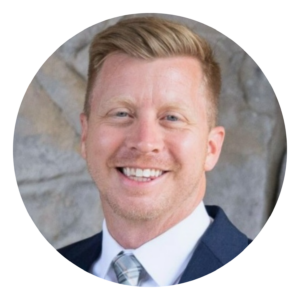 |
Tanner Thompson |
& |
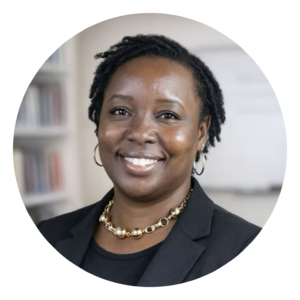 |
Dr. Cynthia E. Thomas |
When people ask what made the inaugural New York Postsecondary State CTE Leaders Fellowship at Advance CTE sponsored by ECMCF (NY Fellowship) work, we can point to the curriculum, coaching, project structure, and the steady support from Advance CTE.
All of that mattered.
But if we’re being honest about what helped fellows finish strong, and what will carry the impact forward, the secret ingredient was connection.
We saw it most clearly near the end of the program during a virtual workshop designed to prepare fellows for their Real-World Project papers and presentations. By that point, the cohort had done what busy leaders have to do to make something like this possible: they showed up, they did the reading, and they put real thought into their projects.
They were also carrying what most professionals carry when a long experience is coming to a close: deadlines, pressure, work responsibilities, and life stress. Everyone wanted to get across the finish line, but turning a year of learning and project work into a short, clear presentation is not easy.
That session included three alumni from Advance CTE’s national fellowship: NinaFe Awong, Eloy Garza, and Willie Thompson. Their timing was perfect. They had recently completed their own fellowship experience, so they could speak plainly about what comes next, what they wished they had known earlier, and how they continued moving their projects forward after the final presentation was over.
Fellows used the time to talk honestly about strategy, uncertainty, and where they still felt stuck. They listened closely to one another. They offered thoughtful suggestions. They helped each other tighten ideas. The quality of the work rose, in part, because the fellows were lifting each other up.
After the presentations were complete, several fellows reflected on how powerful that preparation session had been. Not because it added “more content,” but because it created a moment where the network became visible. They were not doing this alone. They had people.
That’s when the full shape of the program came into focus for us. The curriculum gave the cohort structure. Connection gave it momentum.
What community meant in New York
In New York, “community” in this context meant more than a group of professionals attending the same sessions. It meant a network connected by shared purpose and growing trust, working to strengthen Career Technical Education (CTE) for all learners in a landscape where silos are still very real.
That matters because postsecondary CTE leadership does not live in one neat lane. It spans institutions, delivery models, workforce priorities, student supports, and professional organizations. Strong individuals exist across all of those spaces. What is often missing is a consistent opportunity to work collectively, with enough continuity to build trust and enough structure to turn ideas into action.
Midway through the pilot, we realized something important: many fellows understood their own lane deeply, but the cohort did not yet share a consistent map of the full CTE ecosystem. That gap showed up most clearly during an in-person convening that brought the fellows into a broader gathering of New York State professional organizations.
It was a beautiful moment to finally see everyone together. It was also a moment of clarity. It was clear that postsecondary representation and pathways were not yet fully understood or consistently integrated into the larger professional landscape. Several fellows were still trying to determine where they fit in the broader CTE picture, and we could see that we, as administrators, had assumed a shared foundation that was not consistently in place.
That realization changed our facilitation approach. We strengthened the foundation, named the ecosystem explicitly, and created more opportunities for fellows to connect ideas to practice together, not just collect information individually.
We also worked hard to protect trust. Serious learning requires safety. And safety requires relationships.
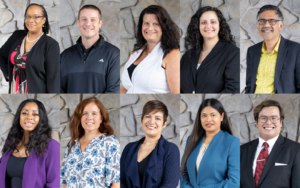
Alumni of the New York Postsecondary State CTE Leaders Fellowship
Three community design moves that made it stick
If there is a theme we would share with anyone building a fellowship, it is this: connection does not happen automatically. You have to design for it.
These moves were not abstract principles. They were practical decisions that affected whether fellows felt connected, whether learning stuck, and whether the cohort functioned as a community rather than a sequence of workshops.
1) Design early connection on purpose
Strong objectives do not automatically create belonging. We saw that early. Fellows understood the goals of sessions, but deeper engagement came later, after people felt connected.
We knew it was working when fellows began asking more honest questions, sharing uncertainty, and building on one another’s thinking rather than staying in “presentation mode.” The in-person convening was catalytic because it accelerated trust and helped fellows see themselves as part of something bigger than their own institution.
For states that cannot meet in person early, the principle still holds: build repeated, meaningful connection points from the start. Small-group pods, relationship-centered protocols, facilitated storytelling, and reflection routines can create continuity even in virtual formats.
2) Create rituals that make it easier to be human
We often started sessions with connection, even when time felt tight, because learning moves faster when people feel safe. A full agenda can create the illusion of productivity, but relationships create the conditions for deeper work.
Low-stakes, human-centered prompts worked especially well. One example of this was as simple as asking about a go-to song. It’s universal. It invites personality without forcing vulnerability around expertise. Those few minutes were not “extra.” They lowered guards, sparked curiosity, and made later conversations more honest and productive.
3) Stay responsive, and be transparent when you adjust
People sometimes describe early program design as “building the plane while flying it.” We understand the phrase, but we do not see responsiveness as failure. We see it as part of the job.
The lesson for us was to build in flexibility and lead with grace, while staying attentive to feedback and data. Real-time design adjustments can strengthen a program when they are made intentionally and transparently. Fellows notice when leaders are listening, and that responsiveness builds trust.
If you realize a foundation is missing, pause and rebuild it on purpose. Do not rush past it. You can still keep momentum if you are transparent about what you are seeing, responsive to feedback, and willing to adapt in service of the cohort.
What the projects revealed, and why connection mattered
One of the strengths of this cohort was that the Real-World Projects did not all look alike. Fellows leaned into their expertise, and that range made the cohort stronger.
Even with that range, a few patterns emerged.
First, fellows were solving local problems in ways that carried broader relevance.
Many projects addressed challenges that show up across institutions: transitions, advising, enrollment, support for all learners. The details differed, but the underlying questions were shared.
Second, systems and infrastructure choices mattered more than we sometimes admit.
When supports are clearer, more consistent, and easier to navigate, fewer students have to depend on insider knowledge. In other words, good systems help learners succeed regardless of their prior familiarity or connections. .
Third, implementation depended on collaborators, feedback loops, and readiness, not just good ideas.
Projects moved faster when fellows could connect across roles and institutions. That is where the community mattered. Connection increased the odds that the work would move from presentation to practice.
Two examples illustrate that range and potential.
Dr. Stacia Smith focused on improving the freshman orientation experience, treating orientation not as an event but as infrastructure: the earliest moment when students learn how to navigate information, supports, expectations, and belonging. Another fellow, Siva Visveswaran, pursued a future-facing enrollment and advising concept that used augmented intelligence to help learners understand pathways and make more informed choices.
Different approaches. Same underlying truth: leadership becomes higher leverage when it is built for the system, not just a single program.
The alumni ripple effect
The fellowship does not end at graduation, at least not if we design it well.
One of our biggest priorities now is maintaining engagement so learning continues and collaboration grows over time. That starts with connection points that already exist, including NYSACTE and Advance CTE’s broader network. It also includes building intentional roles for alumni in future cohorts: recruitment, curriculum feedback, mentoring, reviewing, guest speaking, and hosting.
That continuity matters for two reasons.
First, alumni reduce barriers for new fellows. They understand the program. They can normalize the hard parts. They can help new cohorts get oriented faster and think more strategically about their projects earlier.
Second, the projects should continue evolving after the fellowship. The long-term goal is not completion. It is continued improvement, collaboration, and leadership in action.
Our north star is simple: keep the community active so the ripple effect continues.
Partnership truth
Advance CTE should be visible throughout this story because they are part of why this pilot became possible, and part of why Cohort 2 begins from a stronger starting point.
In plain terms, Advance CTE reduced the barrier to entry for New York. They provided a vetted framework, expanded access to expertise and networks, and coached us in ways that helped us support fellows more effectively. They gave us social capital that we could pass along.
New York’s contribution mattered too. NYSACTE welcomed fellows into the state professional community, and together we worked to tailor the framework to the needs we identified through the cohort experience and advisory input. We built the connective tissue that helped the work hold together. Here is the partnership in the simplest form.
| Advance CTE brought | New York brought |
|
|
A strong framework helps you start faster. Community design is what carries the work forward.
Advance CTE brings the vetted backbone. New York built the trust that makes it stick.
To be the first to know when Cohort 2 applications open for the NY Fellowship, complete our form.